
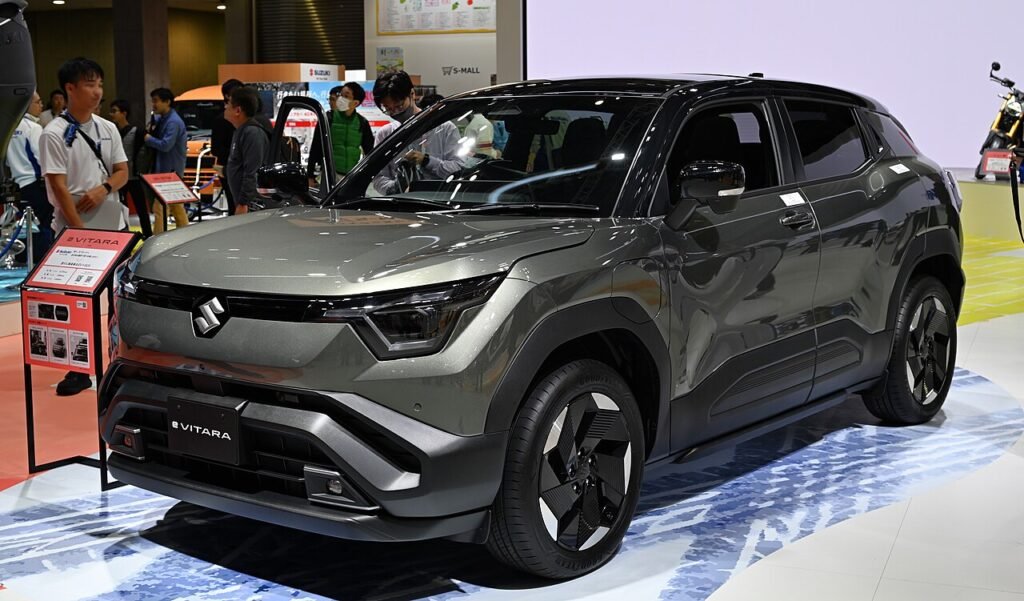
The platform, battery choices and support network come first. Then comes the question of how the purchase is financed.
By DriveQuill Editorial
The e Vitara is a new chapter for Maruti Suzuki that reaches beyond a new badge on the showroom floor. It brings together a dedicated electric-vehicle platform, an Indian manufacturing base, charging and service support, and a different way of presenting the purchase price through Battery-as-a-Service.
The finance headline attracted attention at launch, but it is only one part of the car’s story. Understanding the vehicle first makes the ownership options easier to place in context.
A dedicated electric starting point
Suzuki began Indian sales of the e Vitara, its first battery-electric vehicle, on 17 February 2026. It uses the dedicated HEARTECT-e platform and is manufactured at Hansalpur in Gujarat for domestic and export markets.
NEXA’s India specifications describe a 2,700 mm wheelbase, a flat-floor layout, a 5.2 m minimum turning radius and sliding, reclining rear seats. These details make the packaging worth a closer look: space for a battery beneath the cabin and flexibility for people and luggage are being considered together.
The manufacturing story matters too. This is an Indian-made product with an international role, rather than a vehicle that exists only as a local experiment. That gives enthusiasts reasons to follow its development even if they are not considering an electric SUV themselves.
Two battery choices, with different priorities
The India range uses LFP batteries, marketed as 49 kWh in Delta and 61 kWh in Zeta and Alpha. Delta produces 105.8 kW and has a certified range of 440 km; Zeta and Alpha produce 128 kW and are rated at 543 km. All three are two-wheel drive and produce 193 Nm.
Certified range is a test-cycle figure; actual range varies with driving and conditions. Battery warranty cover is eight years or 1,60,000 km, whichever comes first.
The larger pack comes with a higher motor-output figure as well as a longer certified range. That gives the comparison more substance than a simple choice between two battery sizes. How much of that difference matters will depend on the sort of driving the car is asked to do.
More capacity can offer additional flexibility between stops. Whether that flexibility is useful depends on the journey: a repeated urban route and an occasional long highway day make different demands. The smaller pack also deserves to be understood as a product choice, rather than dismissed because another number in the brochure is larger.
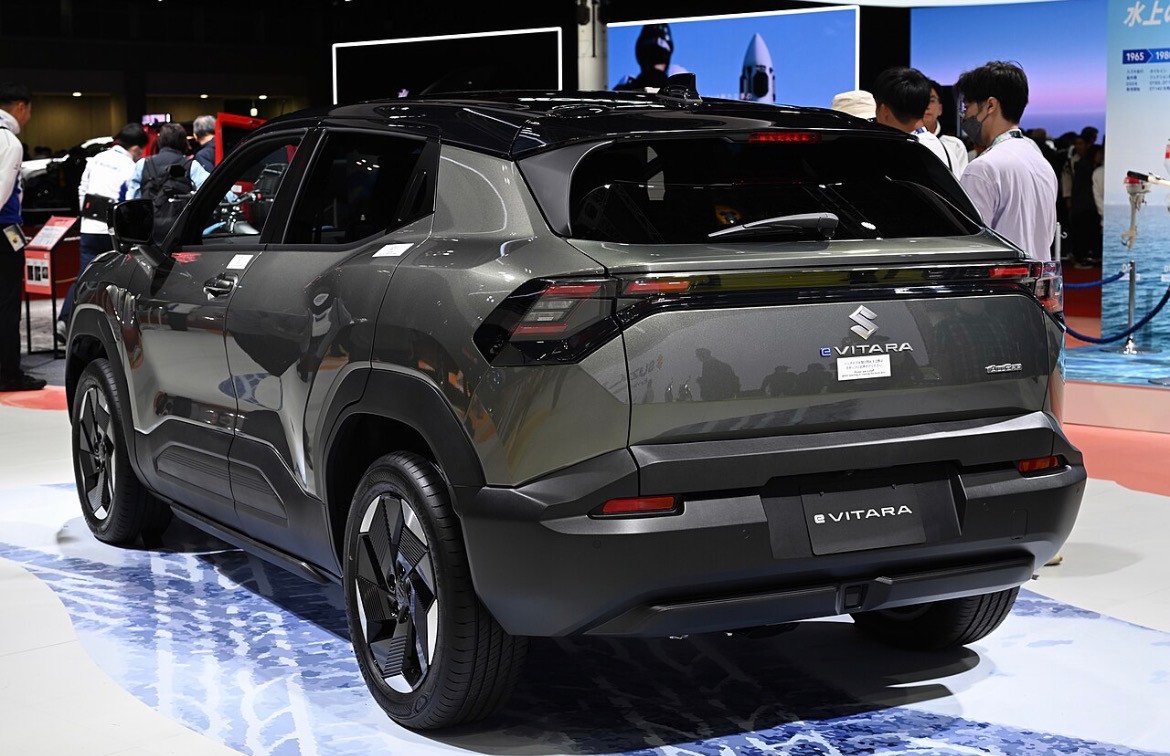
The controls make the technology tangible
Eco, Normal and Sport modes, Snow mode and regeneration boost feature in the India specifications, alongside a 10.25-inch driver display and a 10.1-inch infotainment screen. Alpha adds Level 2 ADAS and a 360-degree camera; those are not whole-range features. The driver remains responsible when assistance is active.
Regeneration settings bring the electric powertrain into an everyday interaction: what happens when the driver eases off the accelerator. The useful questions are how easy that response is to judge in slow traffic and how clearly the selected setting is shown. The number of drive modes is less interesting than whether the controls make the car predictable.
Charging has two different time scales
NEXA quotes approximately 6.5 hours for the 49 kWh battery and nine hours for the 61 kWh battery on 7.4 kW AC charging, from 10 to 100 per cent. Its 45-minute rapid-charging claim refers to the 61 kWh battery going from 10 to 80 per cent using a charger rated at least 70 kW. Conditions affect the times; that charger requirement is not a claim about the car’s peak charging power.
The two figures describe different jobs. AC charging fits a longer parked period, while a rapid stop is normally about adding enough energy for the next part of a journey. Comparing the times without their charge windows would obscure that difference. A buyer’s useful question is which kind of stop will be routine and which will be occasional.
The support around the vehicle
At launch, Suzuki reported more than 2,000 exclusive charging points across over 1,100 cities and 1,500 BEV-ready workshops. It also described an app for locating chargers and checking charging status. These are launch-announced figures, not a live availability count.
The network is part of the product proposition. A charging point is useful when it fits a route and works when needed; a workshop matters when an owner needs support. The experience connecting those services to the vehicle deserves as much attention as the number attached to the network.
For an owner new to EVs, finding a suitable charger and seeing charging progress are small, repeated interactions that shape confidence. A national network total cannot describe the experience at a particular stop. What matters is the coverage along the routes an owner actually uses, including alternatives if the planned charger is unavailable.
Where BaaS enters the picture
The February launch advertised an introductory entry figure of ₹10.99 lakh plus ₹3.99 per kilometre in battery EMI under BaaS. The calculation used the 49 kWh version and assumed 60 km a day. The offer was valid until 31 March 2026, so these are historical launch figures, not a current quotation.
Maruti described a dual-loan arrangement, subject to lender terms and approval. The battery payment excluded charging, and the advertised vehicle figure excluded items such as road tax, insurance and applicable levies.
The idea is to separate part of the battery-related financial commitment from the upfront vehicle figure. That can change the timing of payments, which may be useful to some households. It does not remove the cost of the battery from the complete ownership calculation.
A per-kilometre presentation is easy to understand at first glance, but the repayment schedule establishes the amount due. The useful comparison is between complete offers for the same vehicle, with the deposit, monthly payments, fees and any final amount alongside one another.
Entry price and total payments answer different questions
Consider two hypothetical offers. One requires ₹3 lakh initially and ₹25,000 monthly for 60 months, making ₹18 lakh in total. Another requires ₹2 lakh initially and combined vehicle-and-battery payments of ₹27,000 monthly for 60 months, making ₹18.2 lakh. This simplified illustration excludes fees and charging; it is not an e Vitara quotation.
The second arrangement asks for less at the start but more across the term. Neither number alone explains which arrangement suits a person’s finances. Putting both on the page makes the trade-off visible without labelling one payment structure inherently good or bad.
Charging remains a separate running expense. Home and public charging tariffs, together with actual energy consumption, shape that part of the cost. The finance payment and the electricity bill therefore belong on separate lines.
The ownership details that complete the picture
Anyone considering BaaS will also want to know what happens at resale or early settlement, who holds title to the battery and how insurance is arranged. Those details belong in the lender’s current documents. Warranty cover is a separate question from how the purchase is financed.
The e Vitara deserves to be understood as a complete electric-car programme: vehicle, manufacturing, charging, support and ownership options. BaaS is one way into that story, rather than the whole story.
Sources and photograph credits
- Suzuki launch and manufacturing announcement
- NEXA India brochure
- NEXA charging specifications
- Maruti Suzuki launch offer and footnotes
- Photo 1
- Photo 2


Both photographs: TTTNIS, own work, 2 November 2025, Japan Mobility Show, Tokyo Big Sight. CC0 1.0.