
An ordinary week, including its awkward days, is a useful place to begin the comparison.
Before shortlisting an EV, work out when you would plug it in. The car may spend the night in an apartment basement, sit at an office all day, or rely on a public charger nearby. Each can lead to a different routine. Set that beside the petrol stops a strong hybrid would need, using the journeys your household actually makes.
Which routine should you investigate?
The hybrid in this comparison
Here, strong hybrid means a non-plug-in petrol hybrid, not a mild hybrid or a plug-in hybrid. It uses an engine and an electric motor, with electric-only driving possible under suitable conditions. The battery gets energy from engine-driven generation and regenerative braking. Toyota India explains this arrangement and confirms that the Hyryder’s strong-hybrid system needs no external charging. You still buy petrol, and the engine still produces exhaust emissions. A battery EV such as Maruti Suzuki’s e VITARA needs external charging; regenerative braking recovers some energy but cannot replace plugging in.
A charger you can actually use
For home charging in an apartment or rented space, confirm permission, installation feasibility and access before counting on it. At work, find out whether you can use the charger during your shift. Then ask whether the available time is enough to replace the energy your driving uses. Public charging can work too: check the stop, opening hours and an alternative if it is unavailable. NEXA’s India information covers professional home installation and station-availability tools, but those services alone cannot confirm that a particular location will suit you.
Leave room for a changed plan
Add a late return and an early start to your usual commute, or an unexpected trip across the city. Would the EV have enough charge, and when could you next plug in? Where would a petrol stop fit if you chose the strong hybrid? These are useful questions even if most days are predictable. Do not assume that every public charger will be available when you arrive.
If the family shares the car
Agree who checks the fuel or charge level and who plugs in. Someone also needs to notice if a charging session has failed to start. The next driver’s plans matter, especially after a longer trip. If dependable charging remains unresolved, compare a strong hybrid alongside other fuelled options. If the charging arrangements work, move on to the EVs that suit your needs.
Where the energy comes from
| Question | Strong hybrid | Battery EV |
|---|---|---|
| Energy you add | Petrol to tank to engine | Electricity to charger to battery |
| Driving the wheels | Engine and/or battery-powered motor | Battery-powered motor |
| Replenishing the battery | Engine-driven generation + regenerative braking | External charging + regenerative braking |
| Your regular task | Refuel; no external plug | Arrange usable charging stops |
Simplified energy paths, not battery-size or efficiency comparisons. Strong hybrid here means a non-plug-in petrol hybrid.
The powertrain gets you to a shortlist. The individual cars still need comparing; this exercise does not establish a winner on price, mileage or emissions.
An India-focused ownership explainer, not a road test or a cost, mileage or lifecycle-emissions comparison. The decision flow is editorial guidance. Confirm the chosen variant and charging arrangements before purchase; illustrations do not establish India-spec equipment.
Sources & image credits
Source check: 23 October 2026.
Image credits
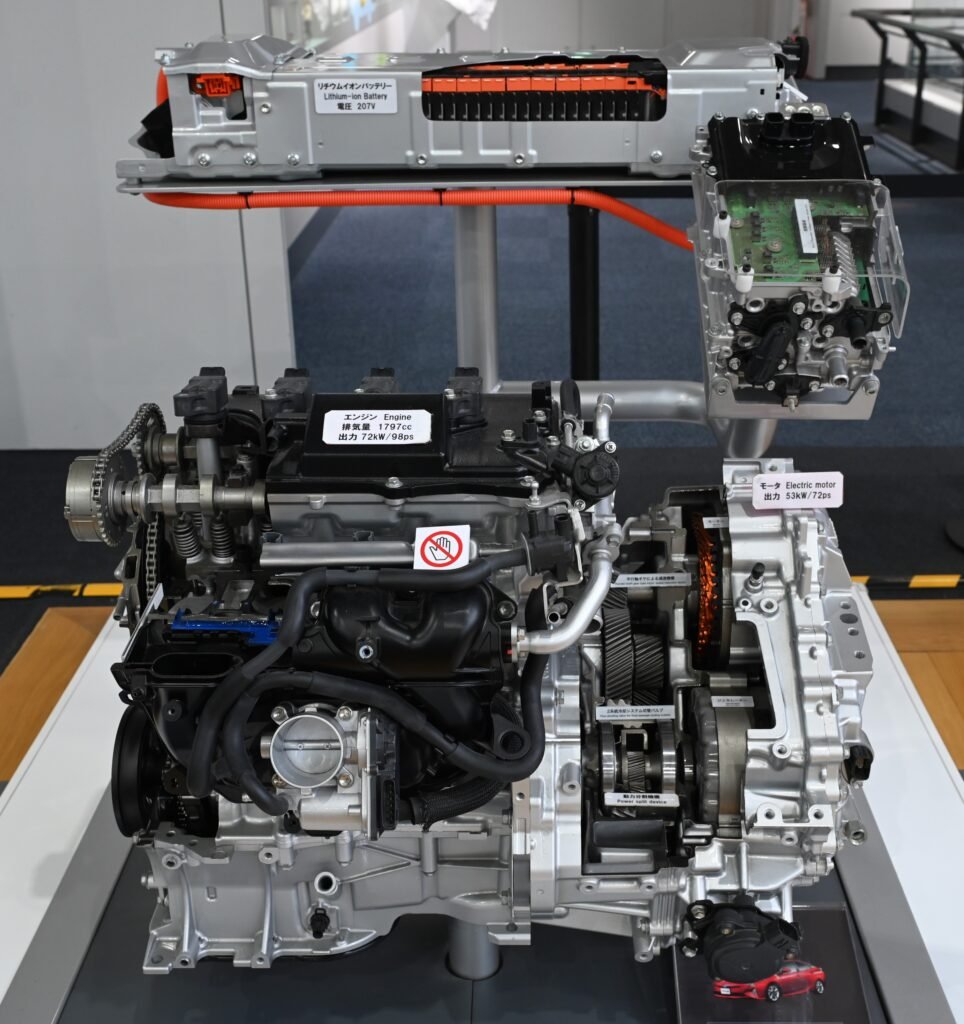
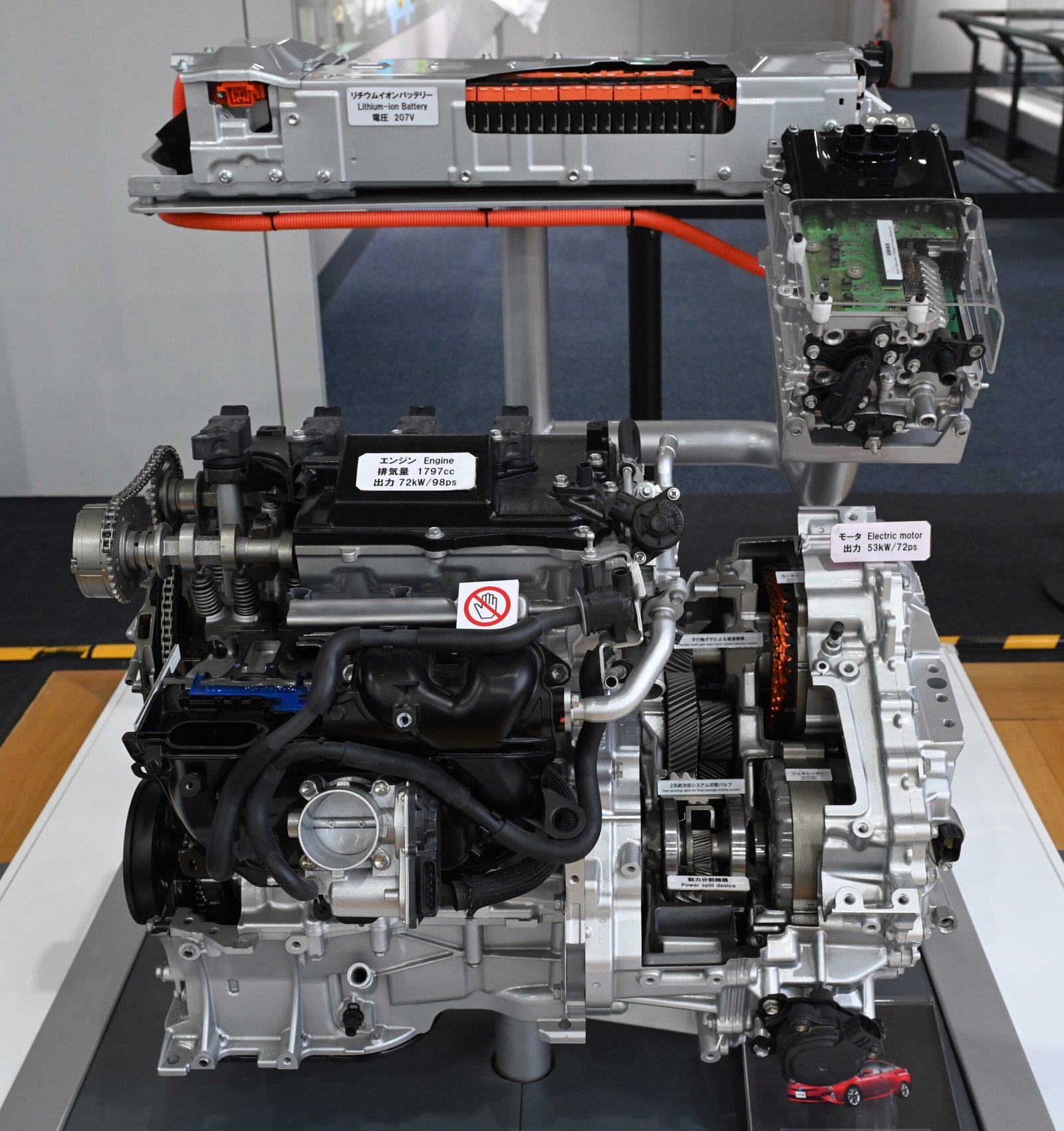
- Photo 1 — Toyota Prius ZVW50 hybrid-system display, photographed in 2025. The engine, motor and battery illustrate a hybrid layout; this overseas display is not an Indian model specification.
Photo: TTTNIS / Wikimedia Commons · CC0 1.0
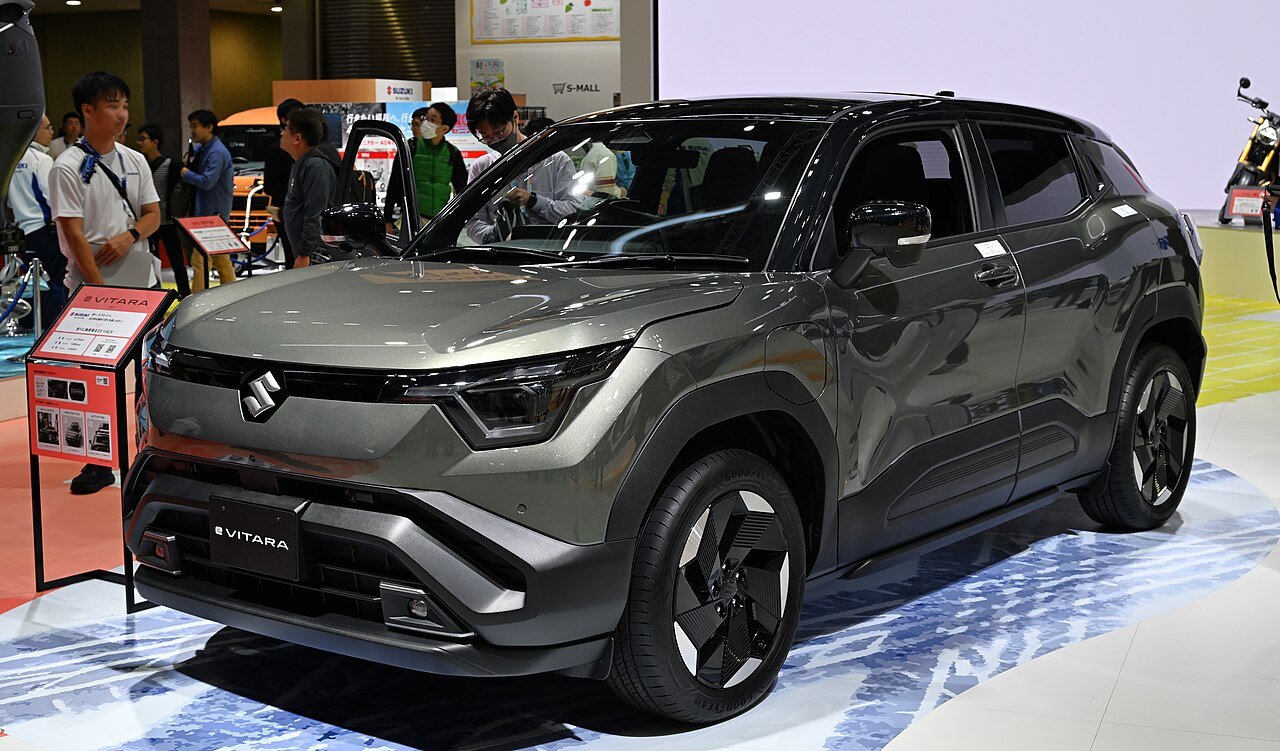
Displayed at resized dimensions only; no crop or visual edits by DriveQuill. - Photo 2 — Suzuki e Vitara Z 4WD at the 2025 Japan Mobility Show. This overseas battery-electric display model illustrates the BEV category; Indian specifications differ.
Photo: TTTNIS / Wikimedia Commons · CC0 1.0
Displayed at resized dimensions only; no crop or visual edits by DriveQuill.
Sources
- [H1] Toyota India – Self-charging Hybrid Electric Technology
- [H2] Toyota India – Hum Hai Hybrid technology explanation
- [H3] Toyota India – Urban Cruiser Hyryder powertrain distinction
- [E1] Maruti Suzuki NEXA – India e VITARA brochure
- [E2] Maruti Suzuki NEXA – e VITARA Eco Solutions
- [E3] Maruti Suzuki India – e for me charging platform