
An unexplained owner name or chassis-number mismatch needs an answer before money changes hands.
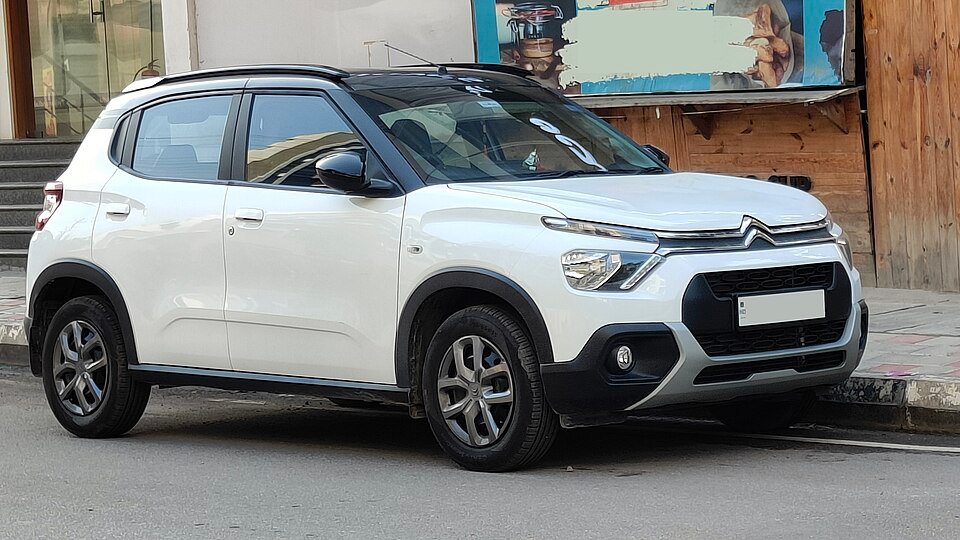

If the name on a used car’s registration certificate differs from the seller’s, ask why. A dealer or relative may be handling the sale, but you still need to establish how the registered owner will authorise it. Sort that out before paying a token. The paperwork check belongs alongside an independent mechanical inspection; neither can do the other’s job.
The three-way identity check
Who is selling the car?
Compare the registered owner’s name on the registration certificate (RC) with the seller’s identity document. Where an intermediary is involved, ask how the owner will authorise and complete the sale. A promise to sort out the paperwork later leaves the question unanswered. Inspect identity documents carefully and avoid circulating copies unnecessarily.
Does the RC match this vehicle?
Compare the registration number and chassis or vehicle identification number on the car with the RC. If you are unsure where to find the identifiers, ask a competent inspector to check them. Any discrepancy needs resolving before you proceed. Maharashtra’s faceless-transfer guidance, for example, asks for seller identity, the RC and vehicle/chassis photographs. Other states may require different documents.
A closed loan needs evidence
A hypothecation entry on the RC records a financier’s interest. If the seller says the loan is closed, ask for the financier’s clearance and check the local transport office’s (RTO) process. Parivahan’s termination guidance identifies Form 35, signed by the owner and financier. Also review the insurance certificate, applicable pollution-under-control record and available service history. Check challan status with the seller on the official eChallan site, following its state-specific links. A clear result cannot establish the car’s entire history.
Put the payment and transfer terms in writing
For a normal sale, Parivahan identifies Forms 29 and 30, along with the RC, insurance and other supporting documents. Several requirements depend on the state. Read the relevant transport department’s current instructions, especially for an out-of-state car, and agree who will supply each document. If you pay a token, record the amount, purpose and agreed refund conditions. Keep the acknowledgement and never sign incomplete forms.
Four checks before committing
| Check | Compare | Pause if |
|---|---|---|
| Seller | Identity and RC owner | Authority is unclear |
| Vehicle | Chassis/VIN and RC | Identifiers differ |
| Open items | Challans and hypothecation | Clearance is unexplained |
| Transfer | Local RTO requirements | Only verbal promises |
A screening checklist; not proof of condition or a guaranteed transfer.
Follow the transfer application through approval and check the updated registration record. Submitting the forms is not the end of the process.
General pre-purchase screening guidance, not legal advice, a title search or a mechanical inspection. Requirements vary by state and transaction; confirm them with the relevant transport authority. No vehicle has been inspected for this article.
Sources & image credits
Source check: 23 October 2026.
Image credits
- Photo 1 — A Citroën C3 photographed in Bengaluru in 2023. Treat exterior appearance as the start of a used-car assessment, not proof of the car’s history. Archive photograph, not a sale listing or a DriveQuill inspection.
Photo: Dairokkan9 / Wikimedia Commons · CC BY-SA 4.0
Displayed at resized dimensions only; no crop or visual edits by DriveQuill. - Photo 2 — A 2018 Jeep Compass photographed in Kerala in 2023. Match the exact vehicle, its identity and its paperwork before committing to a purchase. Archive photograph, not a sale listing or a DriveQuill inspection.
Photo: Sim tcr / Wikimedia Commons · CC BY-SA 4.0
Displayed at resized dimensions only; no crop or visual edits by DriveQuill.